Last Updated: 2 April 2025

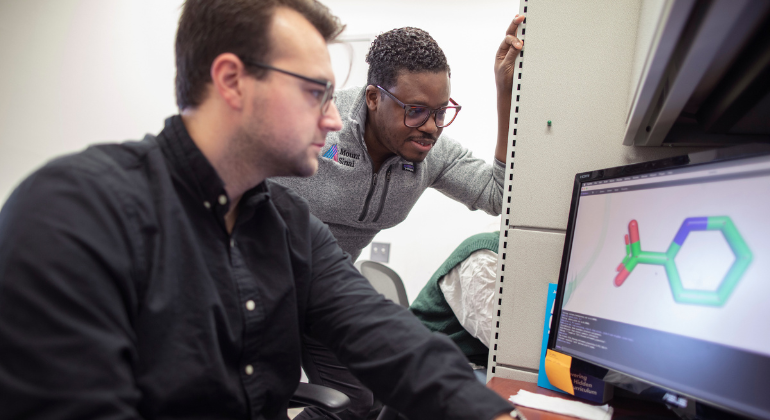
The Icahn School of Medicine at Mount Sinai has launched the AI Small Molecule Drug Discovery Center, a new initiative that uses artificial intelligence (AI) to accelerate the development of small-molecule drugs. The center brings together AI, chemistry, and biology to uncover new treatments with greater speed and precision than traditional methods.
Conventional drug development is slow and expensive, often taking years and billions of dollars to bring a single treatment to market.
By using AI to explore the vast world of potential chemical compounds—including natural products—researchers can more quickly identify candidates with therapeutic promise. The initiative will target diseases with urgent unmet needs, such as cancer, neurodegenerative disorders, and metabolic conditions.
"At Mount Sinai, we are dedicated to redefining the future of medical innovation. By integrating artificial intelligence with cutting-edge chemistry and biology, we can dramatically accelerate drug discovery and develop new treatments for some of the most complex and pressing diseases."
Avner Schlessinger, PhD, Professor of Pharmacological Sciences and Associate Director of the Mount Sinai Center for Therapeutics Discovery
The new center will focus on three core areas: designing novel drug-like molecules with generative AI, improving the safety and effectiveness of existing compounds, and predicting how drugs will interact with biological targets to uncover new uses for known drugs and natural compounds.
By analyzing massive datasets of molecular structures and biological activity, AI models can predict how new compounds might behave even before they're created in the lab. This predictive capability can cut down years of trial-and-error in the drug discovery process.
"Vast combinatory possibilities in optimal drug design lead to high costs, lengthy timelines, and low success rates. AI efficiently navigates this complex landscape, pinpointing the most promising candidates—an achievement unimaginable just a few years ago."
Ming-Ming Zhou, PhD, Dr. Harold and Golden Lamport Professor in Physiology and Biophysics and Chair of the Department of Pharmacological Sciences
The AI Small Molecule Drug Discovery Center also aims to collaborate with pharmaceutical companies, biotech firms, and other academic institutions to drive innovation in therapeutics.
It will support educational opportunities through internship programs, seminars, and AI-driven drug discovery hackathons.
The center builds on Mount Sinai’s recent AI initiatives, such as the establishment of its dedicated AI building and the Center for Artificial Intelligence in Children’s Health.
"AI is fundamentally reshaping how we understand and target disease at a molecular level. By integrating artificial intelligence with genetic insights, we can move beyond conventional drug discovery to design precision therapeutics tailored to the underlying biology of neuropsychiatric and many other complex disorders."
Alexander Charney, MD, PhD, Vice Chair, Windreich Department of Artificial Intelligence and Human Health
The center is advised by a team of experts in drug discovery and AI:
The initial focus will be on building AI infrastructure and starting key drug discovery projects. Mount Sinai expects the center to achieve meaningful progress in AI-powered drug design over the next two years.
"The launch of the AI Small Molecule Drug Discovery Center reflects our commitment to pushing the boundaries of biomedical innovation. By harnessing the power of AI, we are transforming the way new medicines are discovered and developed, bringing hope to patients who need breakthrough treatments faster than ever before."
Eric J. Nestler, MD, PhD, Director of The Friedman Brain Institute, Chief Scientific Officer of the Mount Sinai Health System