Last Updated: 14 October 2026

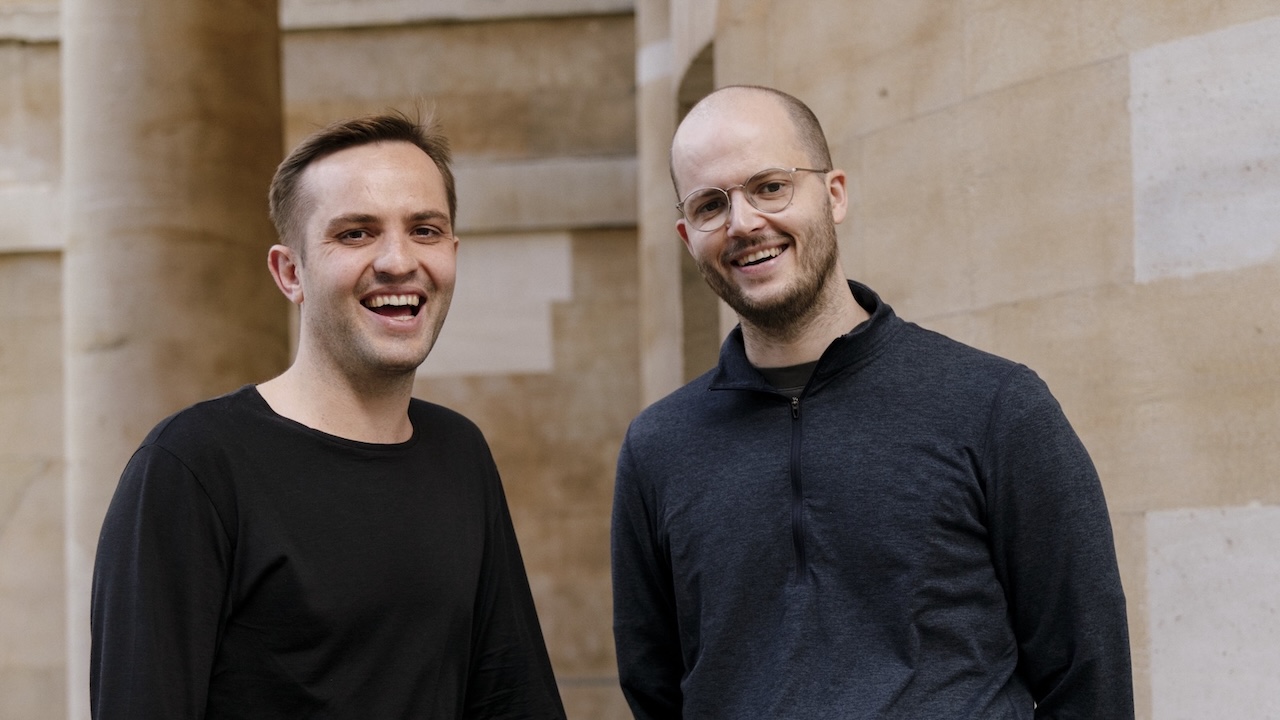
Salience Labs, a UK startup developing photonic chips for AI data centers, is working on faster ways to transfer information between processors. Co-founded by Vaysh Kewada and Johannes Feldmann, the company uses light-based technology to help computing systems exchange data with less delay and lower energy consumption.
AI data centers need increasingly powerful networks as more processors work together to run complex models. According to a July 2026 report from Dell'Oro Group, spending on switches used in AI back-end networks could approach $1 trillion between 2026 and 2030.
Salience Labs has raised $125 million in an oversubscribed Series B round led by Bullhound Capital. AMD Ventures, Intel Capital, SBI Group, Hudson River Trading, and British Business Bank also participated, alongside existing investors. The capital will support product development, manufacturing, and expansion into new markets.
AI systems use graphics processing units, or GPUs, to handle large computing workloads. Thousands of these processors can operate together across several racks inside a data center. They must exchange information constantly, making the speed and efficiency of their connections important to overall performance.
Conventional networking equipment often relies on electrical switches to direct data between devices. As these networks grow, connections can introduce delays and consume more electricity. Optical circuit switching, known as OCS, takes a different approach by using light to direct information, reducing the need to repeatedly convert signals between electrical and optical formats.
This technology is particularly relevant to scale-up networking, which connects processors so they can work together as a larger computing system. Salience Labs is developing integrated optical switches for these environments, including proprietary optical amplification to address technical challenges associated with large-scale deployment.
"Photonics is quickly becoming essential to scaling AI infrastructure, and optical circuit switching can unlock significant gains in performance and efficiency. Salience Labs stands out through its integrated silicon photonics architecture and proprietary optical amplification, addressing key challenges to deploying optical switching at scale."
— Srini Ananth, Managing Director at Intel Capital
The company plans to increase manufacturing capacity and bring its optical switching technology into wider commercial use. Part of the investment will also support the development of switches capable of handling more connections within large computing networks.
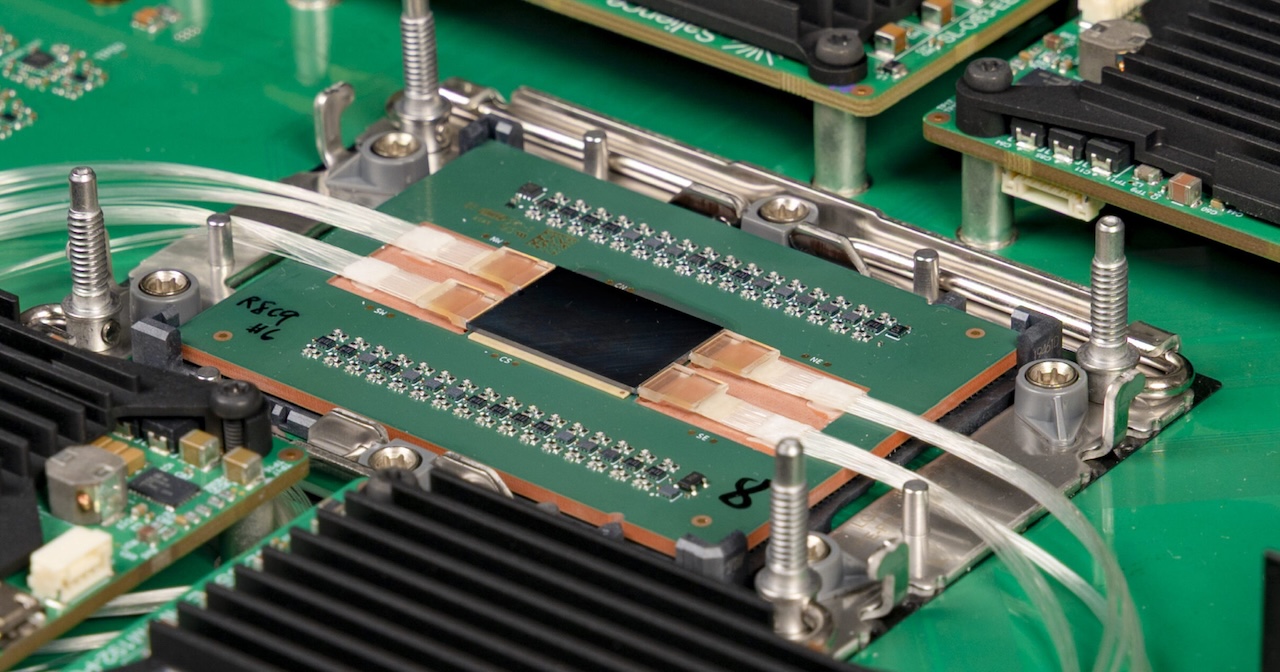
At ECOC 2026, Salience Labs demonstrated a 64-port all-optical photonic switch, which it described as an industry first for silicon photonics-based optical circuit switching. Each port acts as a connection point, allowing the switch to link different parts of a network.
The next products are expected to feature 128 and 256 ports. These switches are intended to support larger computing environments and extend optical connections across both scale-up and scale-out networks. Scale-out networking allows separate computing systems to exchange information and share workloads.
Expansion in the United States is another priority. Salience Labs intends to open a second West Coast location in Silicon Valley, recruit additional employees, and strengthen relationships with customers and technology partners. It will also continue working with Keysight Technologies and Tower Semiconductor as it prepares for higher production volumes.
"AI infrastructure is increasingly being designed at rack scale, where networking has a direct impact on system performance, efficiency and economics. Salience Labs is developing a differentiated, integrated optical switching architecture aimed at addressing these challenges, and AMD Ventures is pleased to support the team as it scales its technology and manufacturing capabilities."
— Patrick Rundell, Director at AMD Ventures
Founded in 2021 and headquartered in Oxford, England, Salience Labs emerged from more than a decade of research at the University of Oxford in the UK and the University of Münster in Germany. Kewada serves as CEO, while Feldmann is the company's chief technology officer.
Its work focuses on silicon photonics, which uses semiconductor chips to control light and transmit information. An optical switch works much like a traffic controller, directing data between different parts of a network. Inside an AI data center, this can help reduce the time processors spend transferring information.
One of the company's products is the OC-32M all-optical switch module. It is designed to reduce reliance on power-intensive optical transceivers, components that convert signals between electrical and optical forms in conventional networks. According to the Salience Labs website, the technology aims to lower both network latency and electricity consumption per connection.
The management team includes Tuan Nguyen, VP of Engineering; Jim Finch, VP of Commercial and Market Strategy; and George Rakuljic, VP of Product. Its engineering work covers silicon photonics, digital electronics, embedded software, and machine learning.
"OCS will play a critical role in AI datacenter networking. As customers roll out optical links in their datacenters, high-performance optical switches are needed to deliver the token economics that workloads demand. Salience Labs has demonstrated a market-leading technology: a fully integrated on-chip solution that scales well to high-volume manufacturing. This funding, alongside the support of our investors AMD Ventures and Intel Capital, will accelerate our growth into high-volume production to enable world-leading performance in AI data centers."
— Vaysh Kewada, CEO and co-founder of Salience Labs
The latest financing brings together venture capital firms, semiconductor industry investors, and financial institutions. Bullhound Capital Principal Callum Stewart will join the company's board of directors following the investment.
Salience Labs previously secured $30 million in a Series A round announced in February 2025, co-led by Applied Ventures, the venture capital arm of Applied Materials, and ICM HPQC Fund. The earlier financing was intended to support further development of optical switching technology for large AI computing networks.
Returning investors in the Series B include Applied Ventures, Oxford Science Enterprises, Cambridge Innovation Capital, and Silicon Catalyst Ventures. British Business Bank separately confirmed a £10 million contribution to the new financing.
"The investor base and customer relationships Salience Labs has developed really speak to the capability of the leadership: Vaysh has assembled a strong team fully focused on designing a switch architecture that both aligns with customers' near-term roadmaps but also scales with them far into the future. Bullhound Capital is proud to back this transformational company that is bringing to reality the next generation of high-performance data centers."
— Callum Stewart, Principal at Bullhound Capital