Last Updated: 15 June 2026


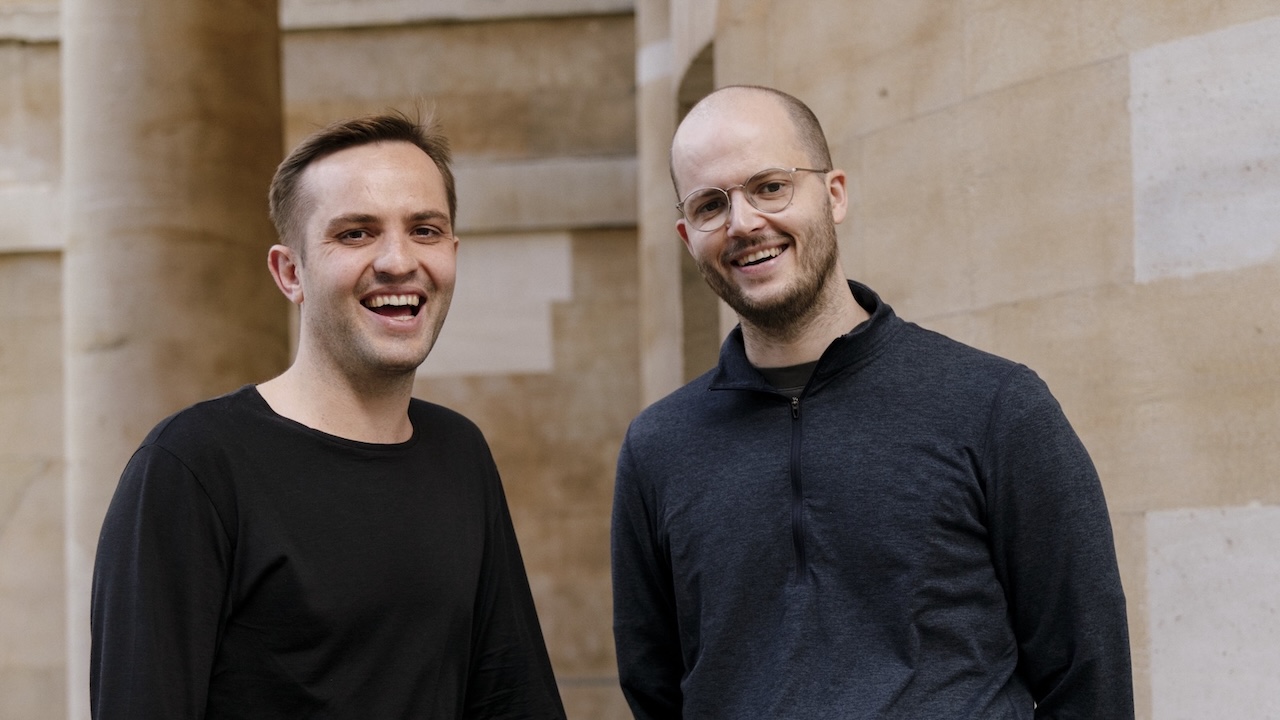
Arcade.dev, a startup that builds the security and authorization infrastructure behind enterprise AI agents, has closed a $60 million Series A funding round. The company was co-founded by Alex Salazar, who serves as CEO. Its core product addresses a problem that has stalled AI adoption across large organizations: agents that perform well in controlled tests but fail when companies try to run them in real business environments.
Most large companies are now experimenting with AI agents, software programs that can carry out tasks autonomously. According to Stanford's 2026 AI Index Report, 89% of enterprise AI agents never reach production, leaving organizations with substantial implementation costs and no working system to show for it. The underlying technology is not usually the issue. What stops deployment is the inability to verify, at any given moment, which agent took which action, on behalf of which user, inside which system. Without that clarity, security and compliance teams will not approve the go-ahead.
The Series A was led by SYN Ventures, a cybersecurity-focused venture capital firm, with strategic investment from Morgan Stanley and Wipro. Together with a $12 million seed round completed in 2025, Arcade has now raised $72 million in total.
Enterprise AI spending is growing fast, but deployment is where things break down. When an AI agent tries to perform a real task, sending an email, processing a payment, updating a customer file, the organization needs to confirm that this particular agent, acting for this particular user, has permission to do exactly that, on that specific system. Tools built to manage human identity were not designed to answer that question for software agents.
"Agents don't fail in production because the model is wrong. They fail because nobody can prove that for any given action by an agent, whether that agent on behalf of that user can perform that action on that resource. That's what we built."
Alex Salazar, Co-founder and CEO of Arcade.dev
The numbers reflect how common this barrier is. Only 12% of enterprise agent initiatives successfully reach production at scale, per the Composio AI Agent Report 2025. Even among organizations that believe their existing policies are sufficient, only 14.4% actually send agents to production with full security or IT approval in place.
Arcade organizes its product around three problems that tend to keep agents out of production. Authorization comes first. At the moment an agent attempts an action, Arcade checks it against the real permissions of the user the agent is acting for. There are no standing permissions or over-permissioned service accounts sitting in the background, which limits the potential damage if an agent behaves unexpectedly or produces an incorrect output.
Reliability is the second area. Arcade provides more than 8,000 tools built specifically for how agents interact with business software, rather than basic wrappers around existing application programming interfaces. That design reduces failed actions and lowers the volume of tokens an agent consumes, which directly affects cost. The third element is governance: every action is logged, recording which agent acted, on whose behalf, and against which resource. That log can be exported into whatever security systems a company already uses.
Arcade also wrote the MCP authorization specification, a technical standard that defines how agents call external tools securely while acting on behalf of a specific user. Anthropic has adopted the specification, and it is now part of the main MCP clients and servers used across the industry. The company reports that its platform has seen tool call volume grow 25 times over the past six months.
The $60 million will go toward expanding the tool catalog, improving governance features, and hiring. Arcade's stated aim is to serve as the control layer for enterprise agent deployments across the industry, regardless of which AI model or vendor a company uses. That ambition positions the company as infrastructure rather than as a product tied to any particular AI ecosystem.
The founding team comes from companies where they built identity, data, and integration infrastructure: Okta, Redis, MongoDB, Snowflake, and Airbyte. That background informs how the company frames its work. Arcade describes the agent action problem as an infrastructure problem rather than an AI problem, and its platform reflects that: it sits outside the agents it governs, rather than being embedded inside them. The logic is that a control system embedded in the thing it controls offers no real independence.
The platform works across cloud environments, running on AWS, Azure, GCP, or on-premises, and connects to identity and permissions systems including Okta, Microsoft Entra, and SailPoint. Since most large enterprises use more than one AI model across different teams and workflows, Arcade built its governance layer to work across all of them uniformly.
Arcade raised a $12 million seed round in 2025. The $60 million Series A, which brings total funding to $72 million, was led by SYN Ventures. Founded in 2021 by former CISOs, CEOs, CTOs, and founders, SYN Ventures manages $900 million in assets and focuses on cybersecurity, privacy, data governance, and industrial security. Jay Leek, Managing Partner at SYN Ventures, joined Arcade's board as part of the deal.
"Every wave of enterprise software has eventually hit the same wall, where adoption outruns the infrastructure that makes it safe. Agents are at that wall right now. Arcade is the only company we've seen that built for the production reality from day one, which is why every serious enterprise agent deployment is going to run through them."
Jay Leek, Board Director at Arcade.dev and Managing Partner at SYN Ventures
Morgan Stanley joined as a strategic investor. Zheng Wang, Head of Strategic Investments at Morgan Stanley, said the company has developed infrastructure to help ensure proper authorization and governance for enterprises deploying AI agents. Wipro also participated strategically in the round.