Last Updated: 11 February 2026

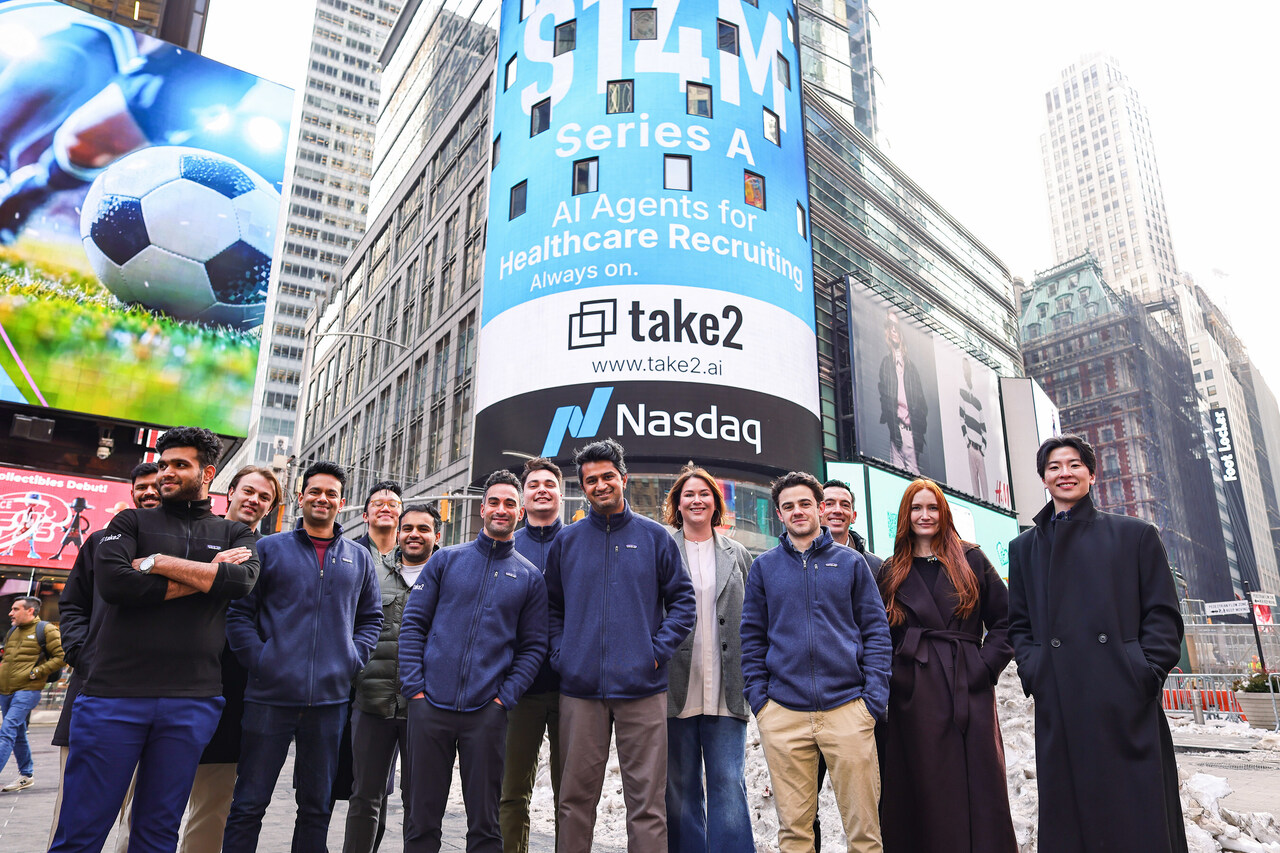
Take2, the company that develops autonomous AI agents for healthcare recruiting, has raised $14 million in a Series A round led by Human Capital. Participation came from Bertelsmann Healthcare Investments, Reach Capital, SemperVirens VC, and Honeystone Ventures. The funding was first reported by Axios.
The company did not disclose its valuation. The new capital positions Take2 to expand its AI driven recruiting platform as healthcare organizations face mounting staffing pressures..
Healthcare employment continues to expand rapidly. One in three new jobs in the United States is in healthcare. At the same time, turnover in many organizations exceeds 50 percent. Vacancy costs remain among the highest across industries.
Despite this pressure, many recruiting teams still rely on manual processes. Phone screenings, candidate tracking, scheduling, and credential checks often require hours of human effort. The hiring burden has become both expensive and operationally unsustainable.
Take2 was built specifically to address that operational bottleneck by automating repetitive recruiting tasks such as screenings, interview scheduling, and data entry. Its autonomous AI agents complete these processes independently, reducing delays, lowering costs, and freeing teams to focus on hiring decisions.
The company’s first product, the AI Interviewer, performs phone interviews with candidates at any hour. It evaluates responses, records calls, and syncs results directly into applicant tracking systems. The system operates without human intervention.
Trained on healthcare specific hiring data, the platform provides structured candidate assessments and predictive insights that aim to improve hiring quality and long term retention. Healthcare organizations use the system to accelerate recruiting cycles while maintaining evaluation standards.
"Healthcare systems are under enormous pressure, and hiring is one of their biggest hidden costs. We're building AI agents that actually do the work — not just assist — so recruiting teams can focus on strategic decisions instead of time-consuming manual processes."
Yaniv Shimoni and Kaushik Narasimhan, co-founders of Take2.
Take2 reports growing adoption among large health systems across the United States.
With the new capital, Take2 plans to extend its AI agents across the full recruiting funnel. The roadmap includes sourcing, screening, credential verification, scheduling, and employee onboarding.
The objective is straightforward. Automate repetitive processes. Reduce vacancy costs. Improve hiring outcomes. The company believes broader automation could help healthcare organizations save millions annually while improving employee retention.
"The bottom line is that Take2 works — it's not just a promise, It enables faster recruiting and hiring, and a more economical, scalable hiring system with a better candidate experience."
Joe Gage, CHRO at Mercy Health and Chairperson-Elect of the Catholic Health Association.
Founded by Yaniv Shimoni and Kaushik Narasimhan, Take2 was designed from the start as an AI agents platform focused solely on healthcare recruiting. The company positions its agent network as a full lifecycle hiring system, from job posting through job offer.
Different from general recruiting software, Take2 concentrates on healthcare specific workflows, regulatory needs, and hiring patterns. This vertical focus has helped the platform gain traction among major health systems.
Take2 states its mission clearly: use autonomous AI agents to manage healthcare recruiting, reduce costs, speed hiring, and improve long term retention.
The $14 million Series A was led by Human Capital, with participation from Bertelsmann Healthcare Investments, Reach Capital, SemperVirens VC, and Honeystone Ventures. The round brings together investors with experience across healthcare, workforce technology, and education sectors, signaling continued investor interest in applied AI solutions addressing operational inefficiencies in healthcare staffing.
This mix of backers reflects a clear bet on automation in high pressure labor markets. As staffing shortages persist across U.S. health systems, investors appear increasingly focused on technologies that reduce administrative burden and improve workforce stability.