Last Updated: 3 January 2025

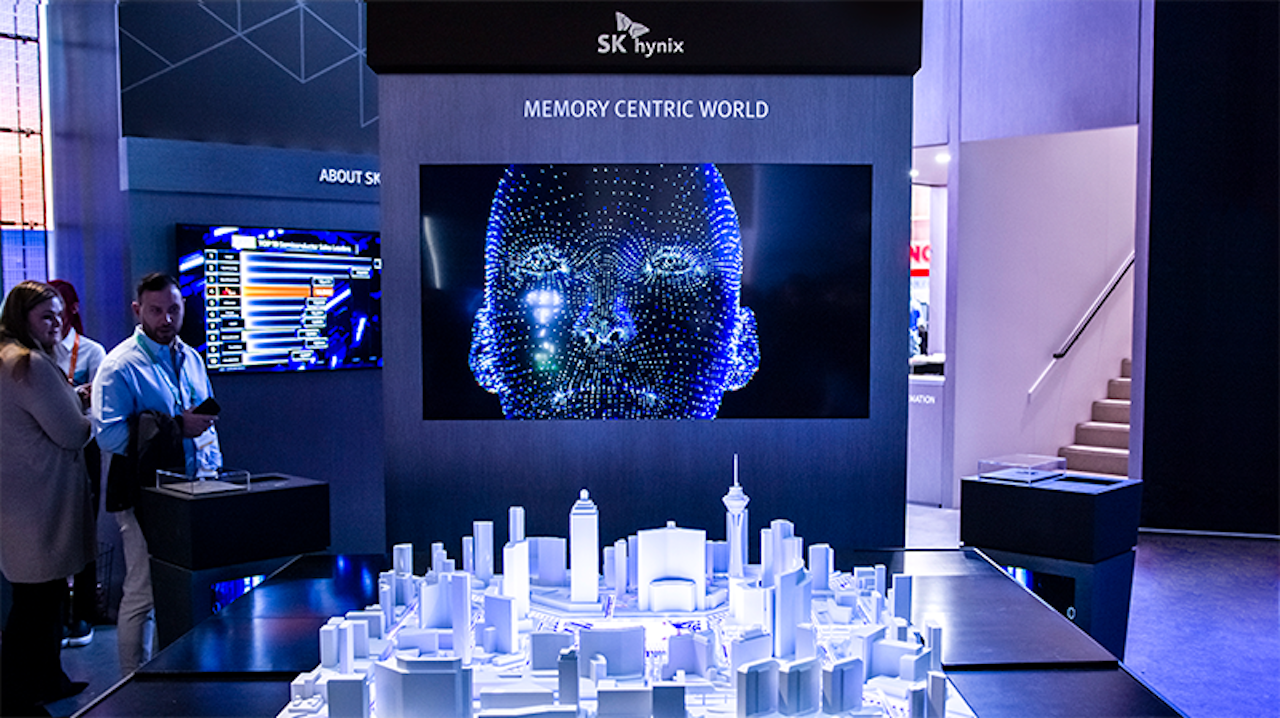
SK Hynix, a leading global supplier of DRAM, NAND flash, and CMOS Image Sensors, announced its participation in CES 2025, where it will unveil its innovative AI memory technologies. The event will take place in Las Vegas from January 7 to 10 (local time), marking the company's commitment to driving AI innovation.
"We will broadly introduce solutions optimized for on-device AI and next-generation AI memories, as well as representative AI memory products such as HBM and eSSD at this CES. Through this, we will publicize our technological competitiveness to prepare for the future as a Full Stack AI Memory Provider".
Justin Kim, President and CMO, SK Hynix
At CES 2025, SK hynix will team up with SK Telecom, SKC, and SK Enmove to present a joint booth with the theme "Innovative AI, Sustainable Tomorrow."
Visitors will see how SK Group’s technology and services are transforming industries, brought to life through visually engaging displays.
One of the main highlights will be SK hynix's 12-layer HBM (High Bandwidth Memory) products, which are the first of their kind in the world. They will also showcase their latest HBM3E 16-layer memory chips, designed to handle more data and heat efficiently.
These innovations demonstrate how SK hynix is pushing the boundaries of memory technology.
SK hynix will display their advanced storage solutions, including the 122TB 'D5-P5336' SSD, developed by their subsidiary Solidigm. This SSD offers record-breaking storage capacity and energy efficiency, making it a top pick for AI-focused data centers. Additionally, their 61TB QLC-based SSD further strengthens their portfolio of high-capacity storage products.
The company will also feature products that improve how devices process data, such as LPCAMM2 (a high-efficiency memory module) and ZUFS 4.0 (a storage solution for managing data faster and more efficiently). SK hynix is also presenting next-gen memory technologies, such as CXL (to expand memory capacity) and PIM (to handle complex AI tasks faster), both essential for future data centers.