Last Updated: 28 November 2024

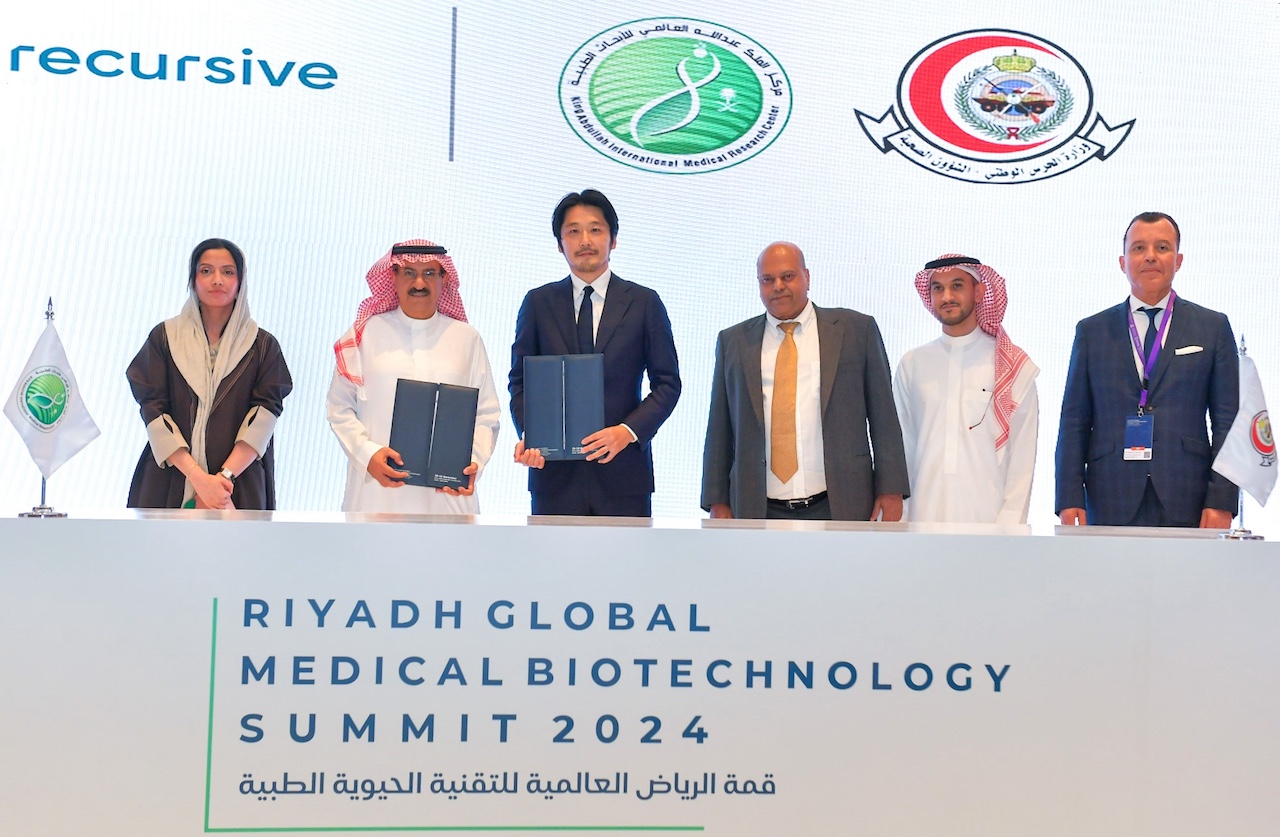
Recursive Inc., a Japanese startup that creates AI solutions for sustainable business, has signed an agreement with King Abdullah International Medical Research Center (KAIMRC), the biggest medical research center in Saudi Arabia. They are teaming up to develop an advanced AI system for early tuberculosis screening.
This partnership, made official on November 11, 2024, at the Riyadh Global Medical Biotechnology Summit, brings together Recursive's AI expertise with KAIMRC's focus on infectious disease research.
Recursive will help KAIMRC build an AI system that boosts early detection of tuberculosis, makes diagnosis faster and more accurate, and speeds up research and predictions.
Together, both organizations want to support Saudi Arabia's Vision 2030, which aims to improve the healthcare system and the quality of life for citizens. This partnership also aligns with the United Nations Sustainable Development Goals (SDGs), especially Goal 3, which focuses on ensuring healthy lives and well-being for everyone.
In 2023, tuberculosis re-emerged as the leading infectious disease killer, surpassing COVID-19. It’s a sobering reality: tuberculosis caused approximately 1.25 million deaths globally that year, with about 10.8 million people falling ill, including 8.2 million new cases.
Tuberculosis, once thought to be on the decline, had made a disturbing comeback. Among the 400,000 people estimated to have developed multidrug-resistant tuberculosis (MDR/RR-TB), only 44% were diagnosed and treated. For many, the hope of recovery hinged on the ability to access timely and effective medical intervention.
Although tuberculosis is both preventable and curable, it remains a significant threat if left untreated. Imagine millions of people falling ill and facing an uncertain future, all because they didn’t receive care soon enough. This is why ending the tuberculosis epidemic by 2030 is so crucial—it’s a key goal under the United Nations SDGs, specifically Goal 3.
Saudi Arabia is also stepping up to meet this challenge through its End-TB strategy by 2035. This strategy, part of the National Tuberculosis Program (NTP), aims to reduce tuberculosis deaths and incidence rates by a remarkable margin compared to 2015 levels.
Through collaboration between KAIMRC scientists, Ministry of National Guard Health Affairs physicians, and Recursive, chest X-ray imaging data will be used to enhance tuberculosis screening and detection. This approach aims to facilitate timely diagnosis and treatment, reducing mortality risks and limiting further transmission.
The partnership isn't just about improving tuberculosis detection within Saudi Arabia; it’s about creating a scalable model that can help other regions with high tuberculosis burdens.
Imagine the difference if more countries could use similar technology to identify tuberculosis earlier, saving countless lives. Moreover, this effort could pave the way for expanding these AI-powered approaches to address other infectious diseases, fostering innovation that strengthens healthcare systems globally.
"We are truly honored to partner with KAIMRC on this groundbreaking initiative. This collaboration embodies Recursive’s commitment to a sustainable future by harnessing cutting-edge AI technology. By combining KAIMRC’s pioneering medical research with our AI expertise, we are confident in our ability to make a meaningful impact, not only in Saudi Arabia but worldwide."
Tiago Ramalho, Co-Founder and CEO of Recursive Inc.
Recursive will continue to leverage AI technologies to tackle global health challenges, driving innovation to create a sustainable world. The company remains committed to expanding its contributions to public health and sustainability initiatives globally.
This collaboration emphasizes breaking down complex issues and providing readers with the context they need to fully understand the impact of the partnership. By enhancing transparency and making the information accessible, Recursive and KAIMRC are inviting readers to see the bigger picture and draw their own conclusions.
Source: Business Wire