Last Updated: 11 June 2026

Most marketing teams that adopt AI tools hit the same wall about three months in. The images look like stock photos that don't exist yet. The videos are impressive for ten seconds, then fall apart. The copy is clean but forgettable. The legal conversation usually comes later, after a generated asset shows a face nobody approved or a character somebody else owns. One complaint, one flagged asset, and the whole experiment gets quietly killed. Back to expensive agencies. Back to three-month timelines.
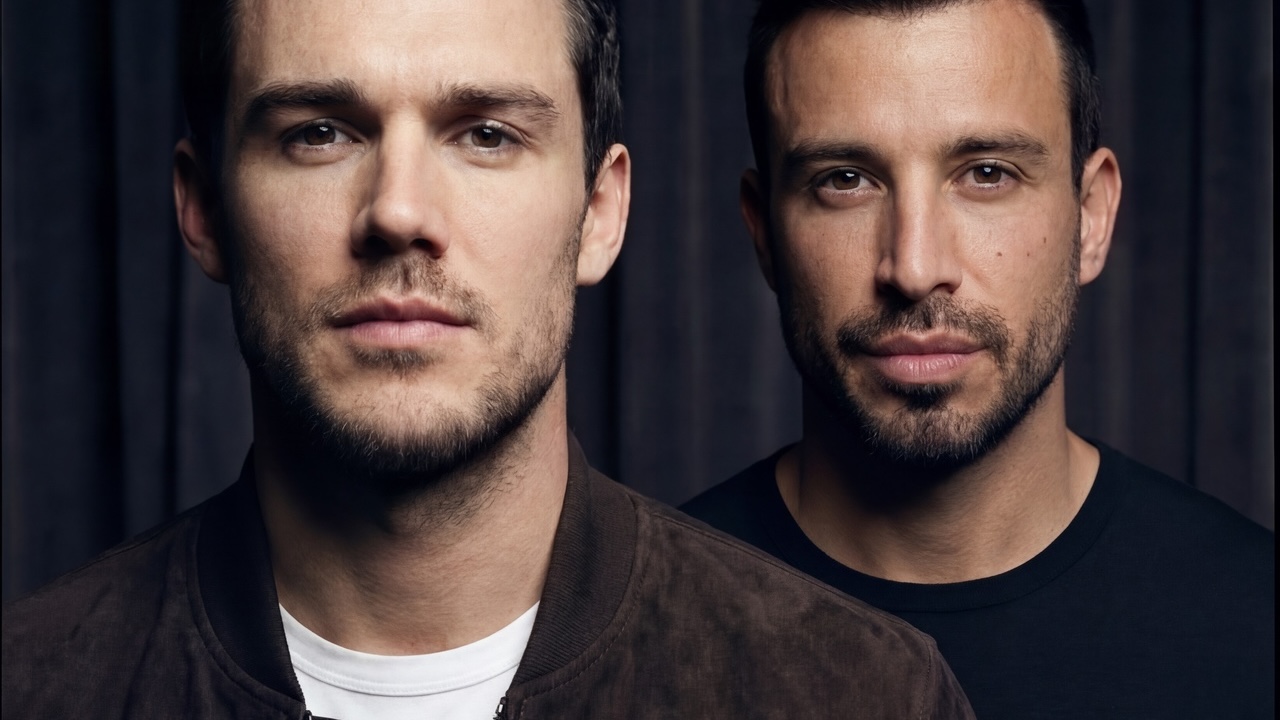
Brennan Erbz and Stafford Schlitt built Flik to fix that. Flik is a generative computer: a workspace that takes a prompt and produces complete creative work across text, image, video, and audio, with IP protection, likeness rights, and data ownership built into the architecture from the start. Not a tool that helps teams move faster. A single workspace that replaces the vendors, the timelines, and the legal guesswork that come with traditional production.
Brennan came up as a machine learning engineer at Snap before its IPO, then built Hashletes, an NFL-licensed digital trading card platform backed by Khosla Ventures, before spending years going deep on AI infrastructure and multi-agent systems. Stafford built a Bitcoin mining operation in Oklahoma and sold it to Riot Platforms, then led growth at Ethernity through multiple exits. Different backgrounds, same conclusion: the real barrier in AI creative production had nothing to do with speed. It was trust.
The hard part of AI-generated creative work was never the output. It was whether anyone could actually use it. We sat down with Brennan and Stafford to understand how Flik is built, what separates it from every other platform promising enterprise-ready AI, and why they believe safety is not a feature you add. It is the product itself.
1. Flik calls itself a "generative computer." What does that actually mean, and why does the framing matter?
Brennan Erbz
A tool does one thing when you operate it. A computer is general-purpose — you bring the intent and it coordinates whatever needs to happen to get you the result. We mean the term pretty literally, because Flik is built like a computer. It has a persistent filesystem where your characters, scripts, references, and finished assets all live and stay consistent. It has a multi-modal pipeline — text, image, video, audio, and music all run on the same stack instead of in five disconnected apps. It has production skills, which are specialized workflows for making a specific kind of thing: a short film, a kids episode, a song, a commercial. And it has an autonomous mode that can run a job from start to finish. The generation models — Claude, Gemini, Nano, Seedance, ElevenLabs — are the components. Flik is the machine they plug into, and the agent layer is the operating system coordinating all of it.
The framing matters because it changes what you can ask for. With a tool you think in tasks — generate this clip, write this line. With a generative computer you think in outcomes — make me the episode, make me the campaign — and the system figures out the hundred steps in between. And that's the part I actually care about, because most people never had a hundred steps' worth of crew and budget, so their idea just died in their head. This is what it looks like to hand that whole machine to one person.
2. Flik says it delivers complete creative work from a single prompt. Walk us through what that process looks like start to finish.
Brennan Erbz
Say you ask for a two-minute animated short. The system picks the production skill for that kind of work — the specialized workflow that knows the steps — and starts by planning: it breaks the request into script, character design, locations, shot list, score, edit. Then it executes them in dependency order, the same way a studio would. Characters get designed and locked first, because every later scene has to stay consistent with them. They get written into the filesystem. The world gets built and stored. Scenes get generated against those stored references so the look holds. Dialogue and voices come in, the score gets composed to picture, and the whole thing gets cut together into a finished file you can actually watch.
The part that makes it work is that filesystem. Everything lives in one connected workspace, so your character in scene one is the same character in scene fifty, and nothing resets between steps. A pile of separate tools can't do that, because each one forgets the moment you leave it. You stay in the director's seat the whole way — you can step in at any point and adjust — but you're not the one carrying files from one app to the next. The system carries the production, and you get to stay in the part that was actually fun: deciding what the thing should be.
3. Flik describes its output as "entirely net-new." What does net-new mean in practice, and how does the platform verify that before anything reaches the user?
Stafford Schlitt
Let's be precise about it, because it's a fair question. Nothing a generative system makes comes from a vacuum — the same way no human artist creates without having absorbed everything they've ever seen.
So "net-new" doesn't mean the model learned nothing from existing work. It means the specific thing that comes out is your own: an original character, an original world, an original piece — not a copy of any existing protected work. The distinction that matters isn't "did the system ever learn from anything," it's "is the output you're holding a reproduction of someone else's property." On Flik, it isn't, because we don't let it be.
The way we keep that true is by refusing the inputs that would make it untrue, before anything generates. You can't prompt Flik into a specific real person, a copyrighted character, or someone else's brand, so the output can't be a clone of those things in the first place. What you build instead — your characters, your world, your brand — is yours, and you can stand behind it as original work. So can the studio or brand sitting behind you. We'd rather refuse a generation at the door than hand someone a finished piece that turns into a rights problem the day they publish it.
4. Inside Flik, what is the agent layer actually doing? Planning, routing, reviewing, editing, or something else?
Brennan Erbz
All of it — and that's what makes it different. People use "agent" to mean a chatbot that can call a tool. What we mean is the operating system of a production machine. The agent layer plans the job, decides which production skill applies, picks which model handles each step, routes the work between them, reads and writes to the shared filesystem so nothing gets lost, checks the output at each stage, and corrects course when something comes back wrong — all without a human approving every move. It also manages the handoffs, making sure the script feeds the storyboard, the storyboard feeds the shots, the shots feed the edit.
The hard part was never calling one model. It was getting a system to run a multi-step creative production reliably, catch its own mistakes, and still come out the other end with something finished. That orchestration layer is the actual product — and honestly it's the part I'm proudest of, because it's invisible when it works. You just get the thing you asked for. The generation models underneath it will keep getting better and we'll keep swapping in the best ones as they ship. The thing that's hard to build — and the thing we built — is the machine that coordinates them. Models commodify. The orchestration, the filesystem, the skills, and the data we accumulate running it do not.
5. Flik blocks real people, copyrighted characters, and protected media before generation. How does that work under the hood — prompt filtering, output review, similarity checks, or a combination?
Stafford Schlitt
It's layered, because a single check is easy to slip past. It starts at the prompt — the system reads what you're asking for and turns away requests that reference specific real people, copyrighted characters, or protected brands. It carries through generation — the protections aren't a setting you can prompt your way around, they're enforced as part of how the system runs. And it checks the output before anything reaches you, including detecting and blocking real human faces. The reason we run it at multiple stages is that bad actors are creative, and one filter at one point is not a serious defense.
6. Flik says its IP and likeness protections were built into the architecture from the start. What does that mean technically, and how does it affect what the system can produce?
Stafford Schlitt
Most platforms shipped a generator first and bolted safety on afterward, which is why their protections feel like a filter you can argue with. We did it the other way. The protections sit in the core of how the system decides what to make — not in a layer on top — so they hold even as the models underneath change. Practically, that means there are things Flik will simply not do. It won't make a real person, it won't make a copyrighted character, it won't reproduce a brand that isn't yours. We don't treat those refusals as missing features. They're the product working exactly as designed.
The reason this matters is where the law is going. Identity and likeness rights are starting to be enforceable at the moment something is created, not just through takedowns after the fact — you can see it in Tennessee's ELVIS Act, recent Danish likeness legislation, the EU's work. We built for that world on purpose, because we think the licensed, accountable market is the one that lasts, and the loose one gets walled off from anything commercial. Buyers will regulate before governments do, because buyers have lawyers.
7. User data, projects, and outputs are never used to train models. Most AI companies improve by learning from usage. How does Flik get better if that loop is off?
Stafford Schlitt
Because we don't need your work to make the system better. We're not a foundation model trying to train on everything we can get our hands on. We're an orchestration layer, and we improve by making the orchestration smarter — better planning, better model selection, better handoffs, better evaluation — and by adopting the strongest generation models as they come out. None of that requires us to mine your private projects. The thing your competitors treat as fuel, we treat as off-limits.
And that's a deliberate trade. If you're a studio or a brand bringing sensitive, unreleased work into a platform, the single thing you cannot tolerate is that work leaking into a model that then serves someone else. We say it internally as: the maker's IP is sacred. Your work never trains our models, it's encrypted, and it's traceable back to you. Giving that up would buy us a marginal model improvement and cost us the trust the whole business runs on. That's not a close call.
8. How does Flik evaluate whether an output is actually ready — against a creative, technical, and legal bar — before it reaches the user?
Brennan Erbz
There are evaluation gates between the steps. The system doesn't just generate and hand you whatever fell out — it judges the output at each stage and decides whether it's good enough to move forward or needs to be redone. Did the character stay consistent? Did the shot match the intent? Did it clear the safety and rights checks? If something fails, it gets corrected or regenerated before it ever reaches you — the same way an editor or a supervisor would catch it on a human production, except it happens automatically at every step instead of in a review meeting at the end.
I'll be straight that taste is the hardest bar and the one we care about most. A system can check whether a face stayed consistent more easily than it can check whether a scene is actually good. So we built real craft judgment into the gates — lighting, pacing, composition, the mix — not just "did it technically render." The system has a point of view about whether something is well made. It has none about what you're trying to say — that part is yours. A system that only checks the technical boxes and has no opinion about quality just floods the world with average, and that was never what we were going to ship.
9. How does Flik keep tone, visual style, messaging, and product accuracy consistent across a full campaign — not just one asset?
Stafford Schlitt
Consistency comes from the same thing that makes a character hold across an episode: the persistent filesystem. Your brand isn't re-described every time you generate something. The product, the palette, the logo, the voice, the approved messaging live in the workspace as references, and every asset in the campaign gets generated against them. So the tenth ad is working from the same source of truth as the first, instead of drifting a little further each time the way it does when you're re-prompting from scratch in a generic tool.
For a marketing team that's the whole ballgame. The fear with AI content isn't that you can't make one good asset — it's that you can't make fifty that all look like they came from the same brand. We built the filesystem and the reference system specifically so that a campaign holds together across every platform, format, and aspect ratio, and so product accuracy doesn't degrade just because you scaled up the volume.
10. Every asset is traceable and auditable. For a legal or compliance team, what does that audit trail actually contain?
Stafford Schlitt
The principle is that nothing comes out of Flik that you can't account for. Every asset is traceable back to its origin and watermarked, so an enterprise can show how a given piece of content was produced and confirm it was made inside the platform's protections rather than pulled from somewhere it shouldn't have been. For a compliance team, that's the difference between trusting AI content and being afraid of it — you can prove provenance instead of hoping for it.
11. Flik is positioned as a replacement for entire creative production stacks. Which parts is AI genuinely handling today, and where do humans still need to be in the room?
Brennan Erbz
The production labor is the part the system genuinely handles today. The work that used to require a crew, a studio, an editing bay, and weeks of calendar time — generating the scenes, keeping characters consistent, scoring, cutting, producing across formats — that happens inside Flik now. That's not aspirational, it's what's running and what people are paying for. When we say it replaces a production stack, we mean the manufacturing part of it: the expensive, slow, headcount-heavy middle.
Where the human stays is the part that was always the real value: vision and taste. Somebody has to decide what's worth making, what the story is, whether the thing is actually good. The system executes, the human directs. I don't think of that as humans being half-replaced — I think the boring, costly labor got automated and the human got moved up to the decision that mattered in the first place. The director didn't disappear. The hundred people they used to need just became software.
12. Flik's been in development for over three years and the idea goes back further. What made this impossible to build earlier, and did the product match the original vision?
Brennan Erbz
Three things had to be true at once, and they only all became true in roughly the last eighteen months.
First, reasoning had to get good enough to run a multi-step production without a human babysitting every step — the planning and self-correction the orchestration depends on. Second, the generation models — image, video, audio — had to cross the line where a paying audience actually accepts the output instead of recognizing it as synthetic. Third, distribution had to be cheap enough that a small team could reach
real people. Pull any one of those and the factory doesn't run. They converged in the same window, and that window is when this became buildable.
As for whether it matched the original vision, the soul of it did — the idea that you should be able to make a finished thing from an idea without needing a studio's permission. What changed is that the vision got bigger as we built, not smaller. Once you can produce content this cheaply, you realize production was only the first piece, and the rest of what a media company does opens up behind it. So the thing we set out to build is the thing that's live. The thing it's becoming is larger than what we first imagined.
13. Three to five years out, what should Flik be able to produce or coordinate that it can't reliably do today?
Brennan Erbz
Length and depth. Today the system is excellent at short and mid-length finished work. In a few years the same reliability extends to long-form — a full film, a full season, something that has to hold an audience's attention and emotional thread across hours instead of minutes. The hard problem there isn't generating more footage — it's coherence over time: characters and story that stay true across a long run. That's where the orchestration gets pushed hardest, and it's where a lot of our work is pointed.
The bigger shift is from making a piece of content to running the whole loop. Production is the part we solved first, because nothing else is possible without it. The next phases are the system coordinating not just how something gets made but how it finds its audience, what gets made next based on what landed — the full cycle a media company runs. The honest version of the future is that an individual, from a laptop, operates something that used to require a company of thousands. That's not a feature on a roadmap — it's the whole point of the thing, and the next few years are us closing the distance to it.