Last Updated: 29 July 2026

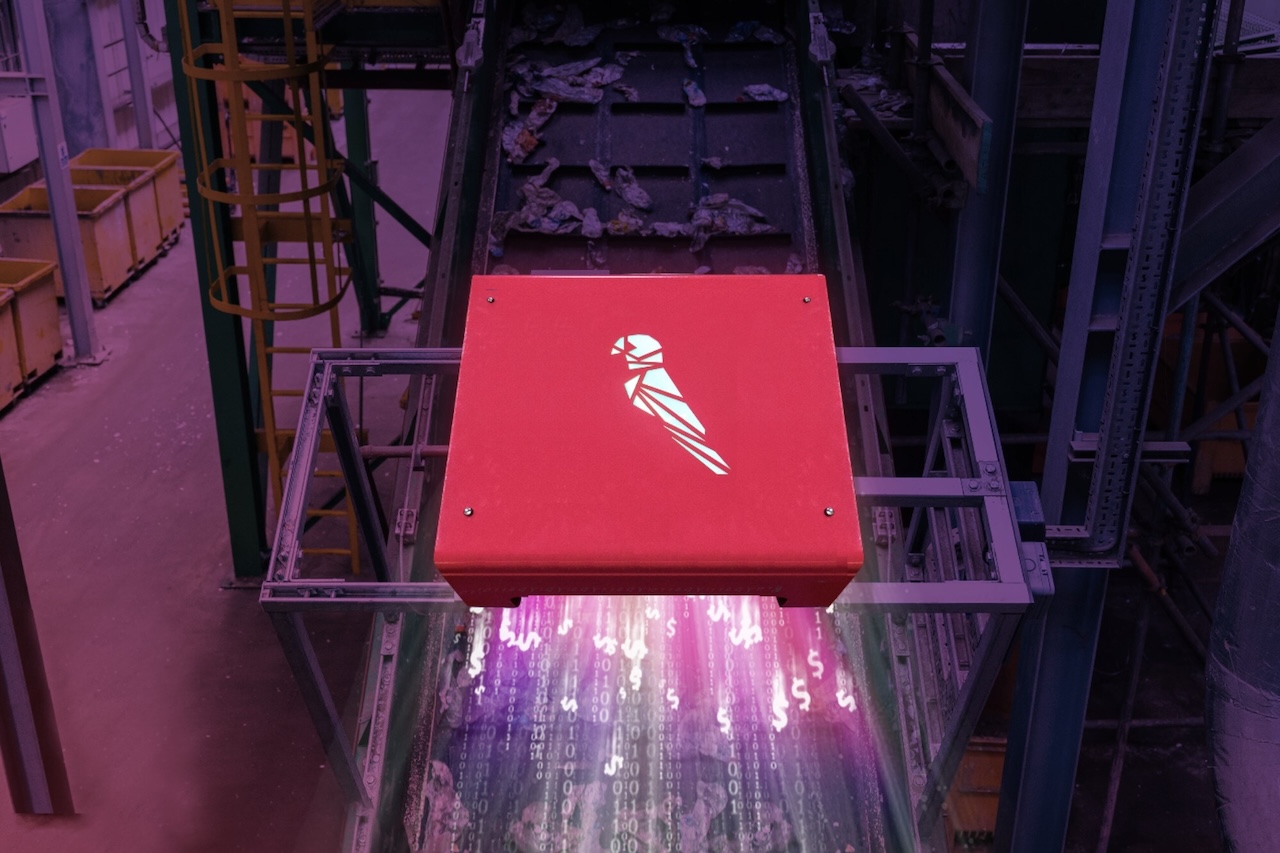
Greyparrot, a London-based startup that uses AI-powered cameras to identify and track waste materials inside recycling facilities, has raised $27 million in Series B funding. Co-founded by Mikela Druckman and Ambarish Mitra, the company installs camera systems above conveyor belts in sorting plants across more than 20 countries. Each system turns every discarded object into a data point, identifying its material, the product it came from, and the brand that made it. The company calls this the data layer for the circular economy.
Waste management is a $2 trillion global industry, yet it runs on remarkably little data. According to Greyparrot, less than 0.1% of the world's 2.3 billion annual tons of solid waste is audited. Most recycling facilities still rely on workers manually pulling samples off a belt and recording what they find. At the same time, regulation is catching up. In the United States, seven states, including California, Colorado, Maine, Maryland, Minnesota, Oregon, and Washington, now have active Extended Producer Responsibility (EPR) laws for paper and packaging. These laws require waste operators and consumer brands to report and prove what happens to their materials after disposal. The World Economic Forum's Global Risks Report 2026 ranks natural resource shortages among the most severe long-term threats to the global economy.
The round was led by Omar Mir, a technology investor who serves as an advisor to The King's Trust International and sits on the board of World Wide Technology. It brings Greyparrot's total funding to $60 million.
The problem Greyparrot is going after is simple to describe but hard to solve: the recycling industry does not know what is on its conveyor belts. Manual sampling covers only a tiny fraction of the waste stream and produces unreliable results. Without continuous, accurate data, facilities cannot optimize what they recover. Brands cannot prove their packaging is actually recyclable. And governments cannot enforce the new regulations they are writing.
The financial cost of that blind spot is large. Researchers at the Pew Charitable Trusts and the consultancy Systemiq have estimated that between $80 billion and $120 billion in plastic value is lost to linear systems every year, meaning it gets buried, burned, or leaked into the environment. Greyparrot's own dataset has flagged an estimated 17.4 billion PET bottles and 4.2 billion aluminum items passing through the facilities it monitors, much of it material that could have been recovered and resold.
"Waste intelligence will do for materials what satellite data did for navigation. For decades, waste has been a blind spot. Nations compete for resources while burying and burning existing resources. What's been missing is the ability to measure what they're losing. Once you can measure a material, you can trade it and invest in it. That is when the circular economy stops being an ambition and becomes infrastructure."
Ambarish Mitra, co-founder of Greyparrot
The new capital will go toward expanding Greyparrot's network of Analyzer units, growing its dataset and platform, and hiring across its AI, data science, and product teams. The company has set a target to abate over one million tons of waste by 2030. North America and Europe are the main areas for geographic expansion, both regions where EPR regulation is creating strong demand for verified waste data.
Greyparrot says the materials identified by its Analyzer systems represent an estimated $2.5 billion in recoverable value across its network. Facilities using its data report efficiency gains of 10% to 30%. At one site, those improvements delivered more than $2 million in savings in a single year.
"Waste is one of the planet's largest untapped resources, and data is the infrastructure that unlocks it. This funding lets us scale rapidly across North America and Europe and grow our AI, data science and product teams. The technology, the demand and the momentum are all here, and for the first time the world can see what it has been throwing away."
Mikela Druckman, co-founder and CEO of Greyparrot
Greyparrot was founded in February 2019 in London by Mikela Druckman (CEO), Ambarish Mitra, and Nikola Sivacki (Head of Deep Learning). The three founders brought more than 20 years of combined AI experience. They tested their first prototype in a South Korean recycling facility in April 2019 and appeared at TechCrunch Disrupt's Startup Battlefield later that year. The first commercial unit went live in a UK facility in January 2021.
The technology works in three layers. The Analyzer is the hardware: an AI camera system mounted above conveyor belts that identifies objects in real time across more than 111 material categories. Sync connects that live data to a facility's existing equipment and software. Deepnest, launched in June 2025, is a platform built for consumer goods companies such as Unilever, L'Oréal, and Kenvue. It lets them see how their packaging performs in real-world sorting systems rather than relying on lab tests. The company now has over 250 Analyzer units deployed across more than 65 facilities in over 20 countries.
Greyparrot says it has passed one trillion waste detections, more objects analyzed than there are stars in the Milky Way. Its recycling facility clients include WM, Circular Services, Veolia, Biffa, and FCC. The company was named one of TIME's Best Inventions of 2025 and ranked among Fast Company's Most Innovative Companies in Europe, the Middle East, and Africa. It has also been recognized by CB Insights, the Global Cleantech 100, and the World Economic Forum.
Omar Mir led the Series B. He has more than 25 years of experience in the global tech industry and is the international board member of World Wide Technology, the largest privately owned technology company in the United States. He also serves as The King's Trust International Advisor on AI and Advanced Technology.
Greyparrot's earlier rounds included $2.2 million in funding in May 2020 and an $11 million Series A in May 2022. Its existing investor base includes Speedinvest, 360 Capital, Closed Loop Partners, Regeneration VC, and Planet Fund. In February 2024, the company signed a strategic partnership with Bollegraaf and Van Dyk, the world's largest builder of recycling facilities, valued at $12.8 million.


