Last Updated: 9 April 2025

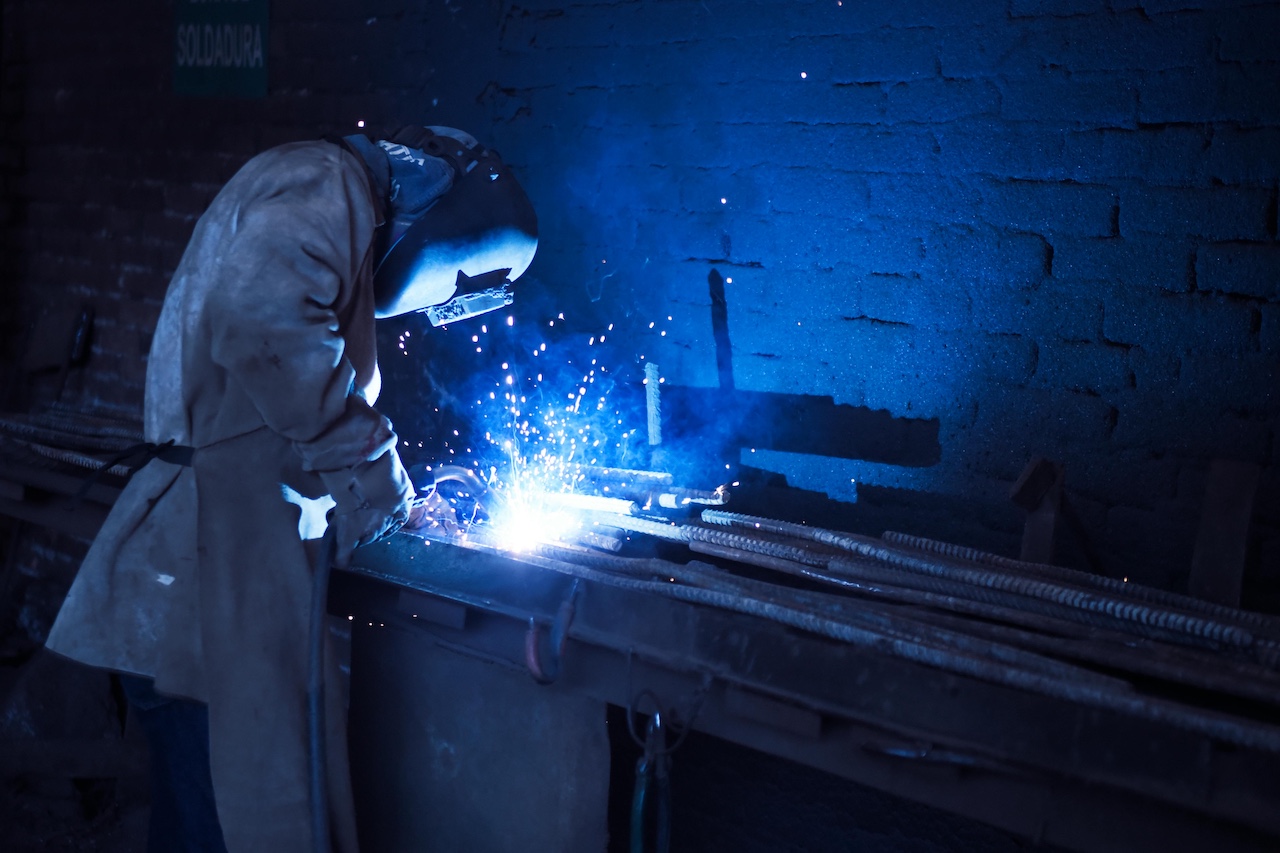
Edge AI solutions are leading the forefront of the rapidly changing industrial risk management strategies across different sectors.
It is with the ability of AI to run directly on Edge AI devices at the source of data that these solutions allow for lightning-fast decisions and heightened awareness in high-risk industrial settings.
The industrial landscape today can be specified as “hyperconnected” which makes managing risk more complex than ever. From handling equipment malfunctions to hazardous working environments, the traditional approaches to risk management are no longer sufficient.
But how exactly is Edge AI helping the modern Industrial Risk Management scenario?
In this article, we are diving deep into all the possibilities of risk management using Edge AI solutions and giving straight answers to any question related to its role in industrial safety.
We’ve always looked at personal protective equipment (PPE) as physical gears which include helmets, gloves, and harnesses. For worker protection. But as hazards today move faster than humans can react, maybe it’s time we rethink what protection means.
Fortune Business Insights projected the Global Edge AI Market Size to increase from USD 27.01 Billion in the year 2024 to USD 269.82 Billion by the year 2032. As the demand for smart watches, smartphones, and wearables goes up, the demand for edge AI is bound to grow.
An edge AI solution specifies the deployment of artificial intelligence directly onto edge devices, which can be of different forms such as sensors, cameras, IoT, or embedded systems. This distinctive feature of edge AI devices being physically present near the source of data generation compared to other AI-powered safety solutions is what is making all the difference.
Hence, instead of all the data gathered is sent to a centralized cloud server for analysis, edge AI processes data locally, delivering real-time insights.
To conclude, is Edge AI the new PPE? Maybe it’s not replacing the helmets and harnesses of the workers—but it’s watching them when any other surveillance system fails to enter.
In industrial settings employing the use of Edge AI solutions for workplace safety commonly use one of the following types of devices.
IBM reported the use of around 15 Billion Edge Devices globally towards the beginning of 2024 with the projected CAGR up to 2030 standing at whopping 24.7%.
There are several reasons why edge AI solutions have captured the interest of heavy industries like construction, manufacturing, oil & gas, or mining. Some of the key features that make a difference in risk management include:
"Edge AI solutions are not about making faster decisions—it’s about empowering frontline safety where every second matters. It brings intelligence to the field, right where the risks are."
Gary Ng, CEO of viAct, edge AI Solutions
Yes. With the use of edge AI solutions for industrial risk management, the areas covered are wider, risks detected are precise and outcomes achieved are better. Here’s how:
Edge AI devices offer 24/7 scans around their surroundings using computer vision technology trained to detect anomalies. Whether it’s a missing helmet, a gas leak, or overheating equipment, the turnaround time for risk detection is minimal:
This proactive approach eliminates any delays associated with manual inspections or cloud-based processing, thereby minimizing injury, downtime, and asset damage.
Risk management in heavy industries often relies on vehicle and machinery health due to its extensive use of the site. Edge AI devices such as IP cameras embedded into machinery or vehicles monitor vibration, pressure, temperature, and usage patterns to predict failures before they happen.
The benefits include:
Let’s consider a vibration sensor on a factory motor in a manufacturing facility that has a subtle shift in frequency. While AI CCTVs in the location might miss it due to a blind spot, an edge AI device attached to the machine immediately suggests a bearing is about to fail, and alert maintenance teams before it turns into a fire or injury hazard.
Edge AI solutions automate critical responses to emergencies without waiting for remote command approval. For instance:
Worker safety is one of the primary issues of industrial risk management even in 2025. With the latest rate of 5283 fatalities reported by OSHA, using edge AI devices such as wearables and smart cameras brings added levels of compliance monitoring.
These edge AI devices help by:
Edge gateways have the capability of combining inputs from multiple devices—such as wearable monitors, IP cameras, and sensors—to provide context-aware intelligence. Further, the integration of a conversational AI powered by LLM makes the communication process smoother.
For instance:
This synergy between Edge AI devices and Conversational AI ensures not only faster risk detection but also clearer communication and safer worker response.
Let’s consider a regular mid-sized construction site with around 80 workers, 12 machines, and daily output targets ranging from around 3,000 labor hours per month.
As soon as edge AI solutions are deployed using different modes, unsafe behavior detections increase by 34%, PPE compliance jumps by 52%, unscheduled maintenance is cut down by 38%, response time to high-risk incidents improves by 70% and the daily safety reports now take 3 minutes to generate instead of 3 hours.
All because the near misses are clear, a missing hard hat is identified even in a remote task location, every machinery pattern is recorded and incident logs can now be voice recorded instead of manual reporting.
Edge AI solutions are transforming industrial risk management by bringing intelligence directly to the frontline—where safety decisions need to be made in real time.