Last Updated: 29 July 2025


AI headlines tend to spotlight product launches and bold predictions — but another shift is happening quietly: more women in AI are building, applying, and guiding the technology into real-world use.
Today, women still represent just 22% of the global AI workforce, yet their influence runs deep — from advancing healthcare and education to guiding public policy and ethics frameworks. And momentum is growing: 68% of women in tech now report using generative AI tools at work every week, placing them at the heart of how AI is actually being adopted and applied.
At Just AI News, we’re celebrating top women in AI — researchers, founders, educators, and leaders in AI ethics — who are transforming the future not with hype, but with consistency, vision, and purpose. Their work speaks for itself.
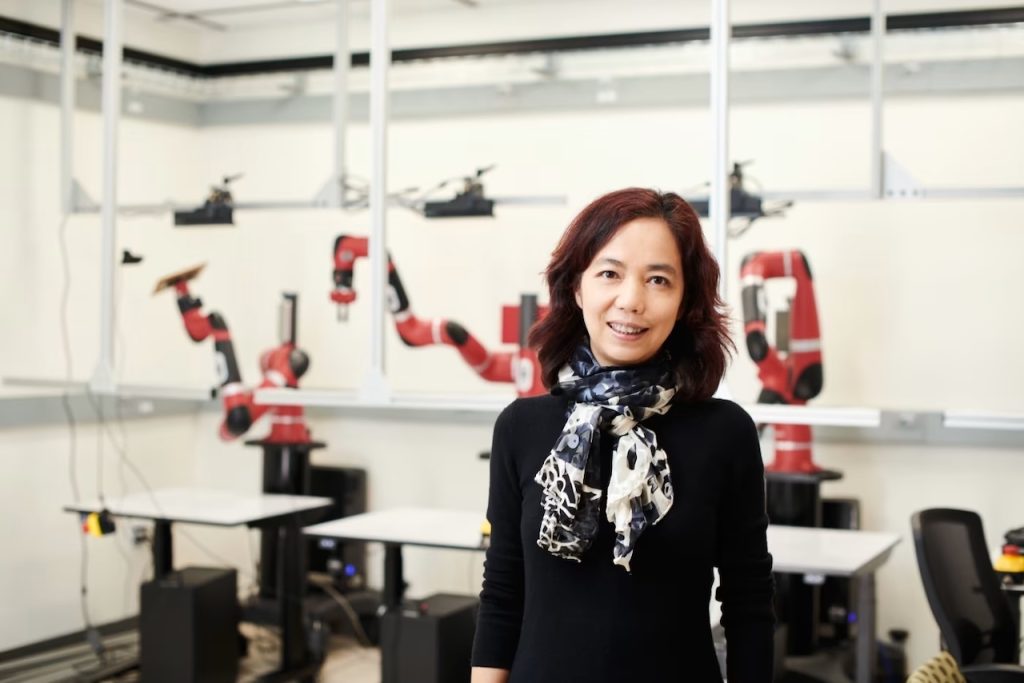
Fei-Fei Li is a Stanford professor and co-director of the university’s Institute for Human-Centered AI. She’s best known for creating ImageNet, the massive image database that helped spark the deep learning revolution in computer vision. Her work made it possible for machines to truly "see."
At Google Cloud, she worked to bring AI to real-world industries like healthcare and agriculture. But her impact goes far beyond research and deployment — she’s also a leader in AI ethics, inclusion, and education. Through AI4ALL, she’s helped open doors for underrepresented students to enter the field.
Dr. Li believes AI should empower people, not replace them. Her career reflects that belief — combining world-class research with a deep commitment to human values.
Mira Murati helped build some of the most talked-about AI tools in the world — and now she’s moving into a new chapter. As Chief Technology Officer at OpenAI from 2022 to 2023, she led the teams behind GPT-4, DALL·E, and other generative AI systems that redefined what software could do.
Her career path reflects a blend of technical depth and creative thinking — from working on Tesla’s Model X to experimenting with new interfaces at Leap Motion. At OpenAI, she wasn’t just a technical leader — she was also one of the company’s clearest voices in the public conversation around AI’s future.
Even at the height of ChatGPT’s success, Murati was calling for outside oversight. She spoke often about AI’s societal impact, arguing that companies like OpenAI shouldn’t regulate themselves.
In late 2024, she stepped away to launch a new AI venture, Thinking Machines Lab, — signaling that her vision for responsible, ambitious AI is far from finished.
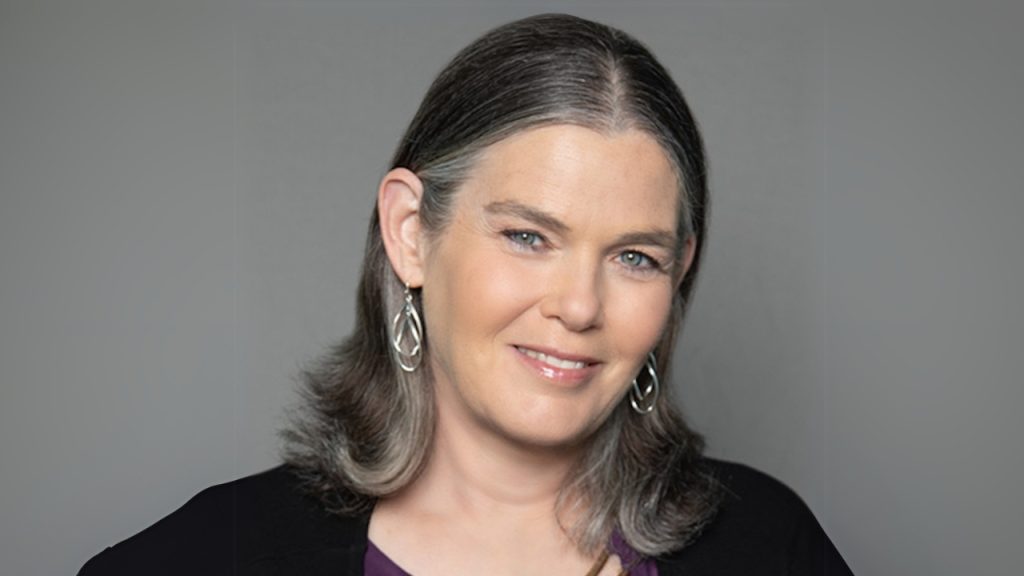
Daphne Koller is one of the rare figures in AI who moves fluently between lab research, startups, and social impact. As founder and CEO of Insitro, she’s applying machine learning to biology — using AI to spot patterns in genetic data and speed up drug discovery. The goal? Develop better treatments, faster.
Earlier in her career, Koller co-founded Coursera, helping millions access high-quality education online. That same spirit of expanding access now guides her work in healthcare: using AI not just to crunch data, but to solve problems that matter.
A former Stanford professor and MacArthur Fellow, Koller has spent decades proving that AI can be both scientifically rigorous and deeply human-centered.
If there’s one thing Daniela Amodei has made clear, it’s that responsible AI doesn’t happen by accident — it has to be designed into the system. As co-founder and president of Anthropic, she leads a team focused on making AI models more understandable, steerable, and aligned with human values.
The company’s flagship product, Claude—one of today’s leading AI platforms—stands out not just for its capabilities but for its foundation: a method called constitutional AI, which relies on built‑in principles to guide behavior. This structure is meant to make the system more predictable and less risky.
Amodei’s background includes policy work in the U.S. Senate, operations at Stripe, and safety leadership at OpenAI — a combination that gives her a wide-angle view of what AI needs to succeed long term. She’s helping transform an ecosystem where ethics, safety, and scale aren’t in conflict — they’re the goal.
To understand how Claude’s model architecture reflects this philosophy, including the latest Claude 3 and 3.5 versions, check out our Claude Models Explained guide.
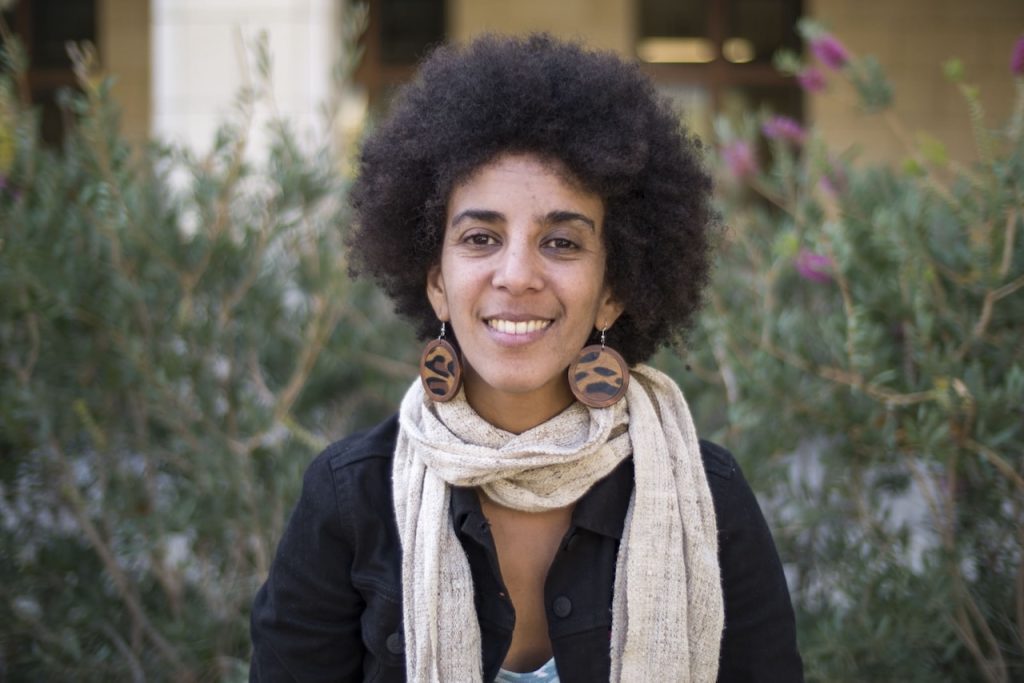
Dr. Timnit Gebru is the founder and executive director of the Distributed AI Research Institute (DAIR) — an independent research group she launched to reimagine how AI is studied and built, free from the pressures of Big Tech. At DAIR, the goal is clear: center the needs of communities, not just corporations.
Before DAIR, she co-led Google’s Ethical AI team — until her dismissal in 2020, after raising concerns about the unchecked power of large language models. Her exit made headlines and sparked a reckoning over diversity, accountability, and who gets to shape AI’s future.
Gebru’s work is fiercely principled. From uncovering racial bias in facial recognition to calling out the environmental cost of giant AI systems, she’s redefining what responsible AI looks like — and who it should protect.
Meredith Whittaker is the President of the Signal Foundation, where she’s leading one of the tech world’s boldest bets: building secure messaging that’s private by design — no ads, no tracking, no surveillance capitalism.
Before Signal, she spent over a decade at Google, where she led research teams — and helped organize one of the biggest employee walkouts in tech history. She challenged the company’s ties to military AI and co-founded the AI Now Institute, one of the first research hubs focused on the social impacts of artificial intelligence.
Whittaker doesn’t mince words. For her, AI isn’t neutral — it’s built on data and power, often without consent. Now at Signal, she’s proving that privacy-first tech can work — and scale — without selling us out.
Joelle Pineau is one of the key voices pushing for scientific integrity in AI. As Vice President of AI Research at Meta and a professor at McGill University, she leads teams working on the foundations of machine learning — with a focus on reinforcement learning, where systems learn by trial and error.
She’s well known not just for her technical contributions, but for setting a higher bar for how AI research is done. Pineau introduced reproducibility challenges at top AI conferences to encourage researchers to share their code and results. That push for transparency is now a defining feature of the research culture at Meta’s AI labs, especially in Montreal, where she helped build the company’s presence.
Her message is clear: if AI is going to be trusted, it needs to be testable. Pineau continues to shape the field — not only through research, but by mentoring the next generation of scientists and advocating for responsible, open progress.
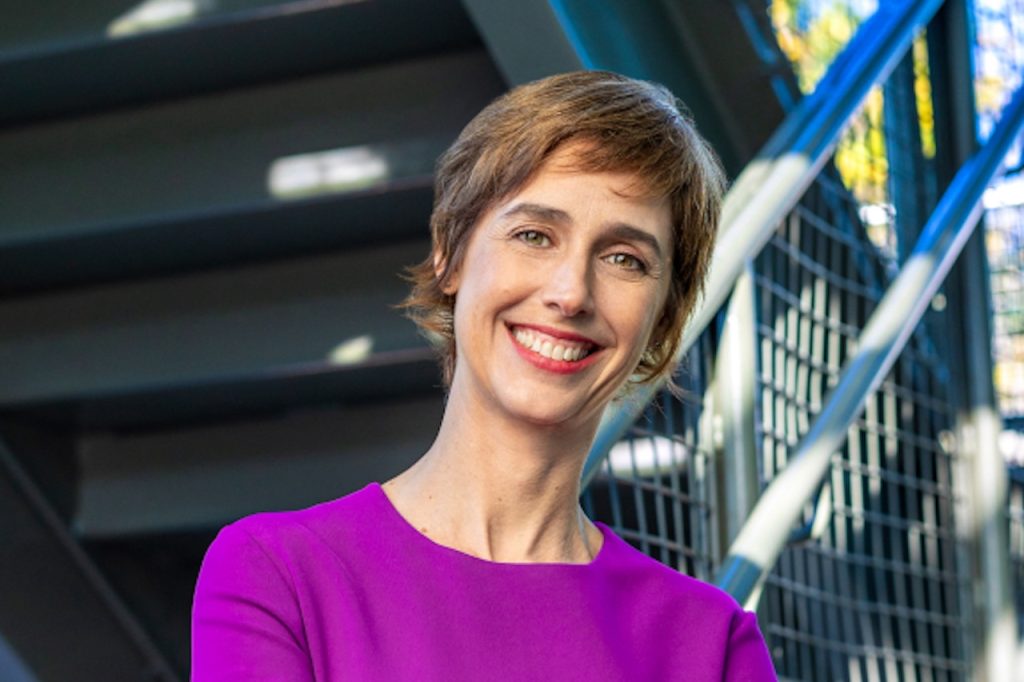
Dr. Ayanna Howard is the Dean of the College of Engineering at Ohio State University, where she’s reshaping what the future of tech education looks like — not just through innovation, but through inclusion. A roboticist by training and a leader by nature, her career has moved from building AI systems at NASA’s Jet Propulsion Lab to founding a startup for children with disabilities.
Her work focuses on interactive and assistive robotics — systems that learn, adapt, and serve people in real-world settings, from therapy sessions to classrooms. She doesn’t see robots as gadgets, but as partners in care, education, and equity.
Howard is also a fierce advocate for diversity in STEM. In her book Sex, Race, and Robots, she calls out the blind spots in AI design and asks: What kind of world are we building — and for whom?
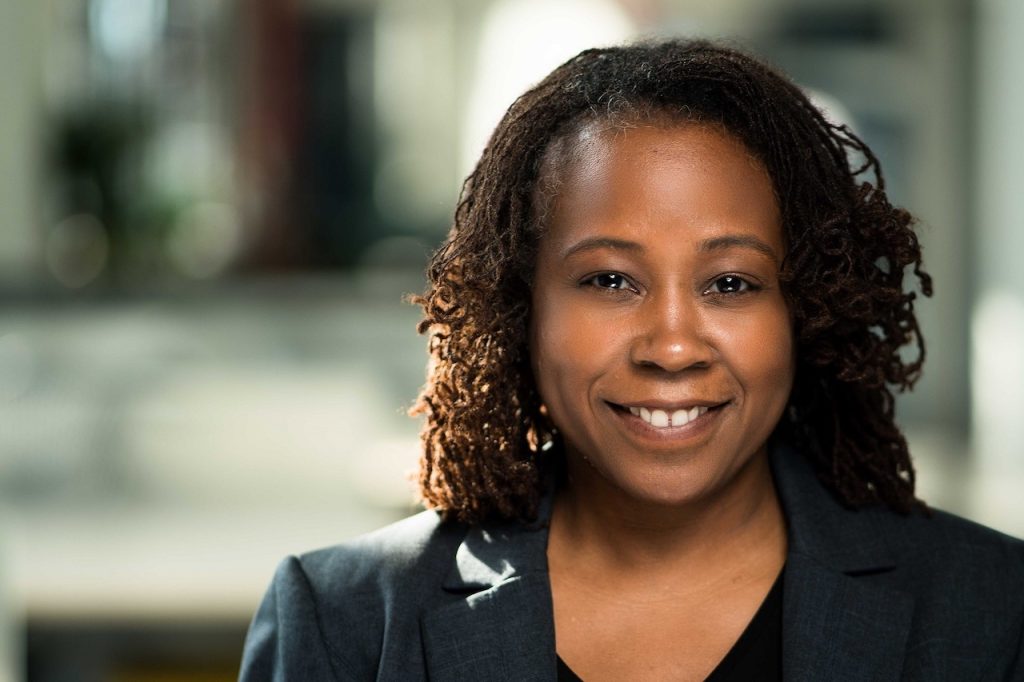
Cynthia Breazeal was one of the first to ask not just what robots can do, but how they should make us feel. At the MIT Media Lab, she leads the Personal Robots Group, where she’s spent decades building machines that interact with people — not just functionally, but emotionally.
Her early project, Kismet, smiled, frowned, and cooed long before Siri had a voice. Later, she introduced Jibo, the social robot that lived on your kitchen counter — not a blockbuster, but a blueprint for the wave of AI assistants that followed.
Now, through MIT RAISE, she’s focused on making AI education accessible and socially meaningful. Breazeal’s message has always been clear: AI isn’t just about what it knows — it’s about how it fits into our lives. And that means designing tech that’s helpful, respectful, and built with people in mind.
Daniela Rus isn’t just building smarter robots — she’s rethinking the relationship between humans and machines. As director of MIT’s CSAIL (Computer Science and Artificial Intelligence Laboratory), she leads one of the world’s most ambitious research hubs, where AI meets the physical world.
Her work spans self-driving cars, soft robotics, and machines that can learn and adapt in dynamic environments. Whether it’s a robot folding itself like origami or a system navigating city streets, her focus is clear: embed intelligence into the objects that move through our lives.
Rus champions a vision of “physical intelligence” — AI not trapped in a screen, but moving alongside us. She’s also changing the way the next generation of scientists approach AI, as deputy dean of research at MIT’s College of Computing. Her message is consistent: tech should be collaborative, transparent, and built to work with people, not around them.
Regina Barzilay doesn’t just research AI — she’s applying it where it matters most: human health. A professor at MIT and AI Faculty Lead at the Jameel Clinic, she’s helped transform how machine learning can improve everything from early cancer detection to drug discovery.
After surviving breast cancer herself, Barzilay shifted her focus from language models to medical breakthroughs. One of her most widely recognized projects uses AI to predict breast cancer risk years before symptoms appear. Another helped discover a new antibiotic — not by trial-and-error, but by letting an algorithm scan molecular structures for overlooked solutions.
She’s not interested in flashy demos. Barzilay pushes for AI that’s collaborative, clinically grounded, and carefully tested. In her view, the real breakthroughs happen when doctors and data scientists work side by side — and when innovation is built with empathy.
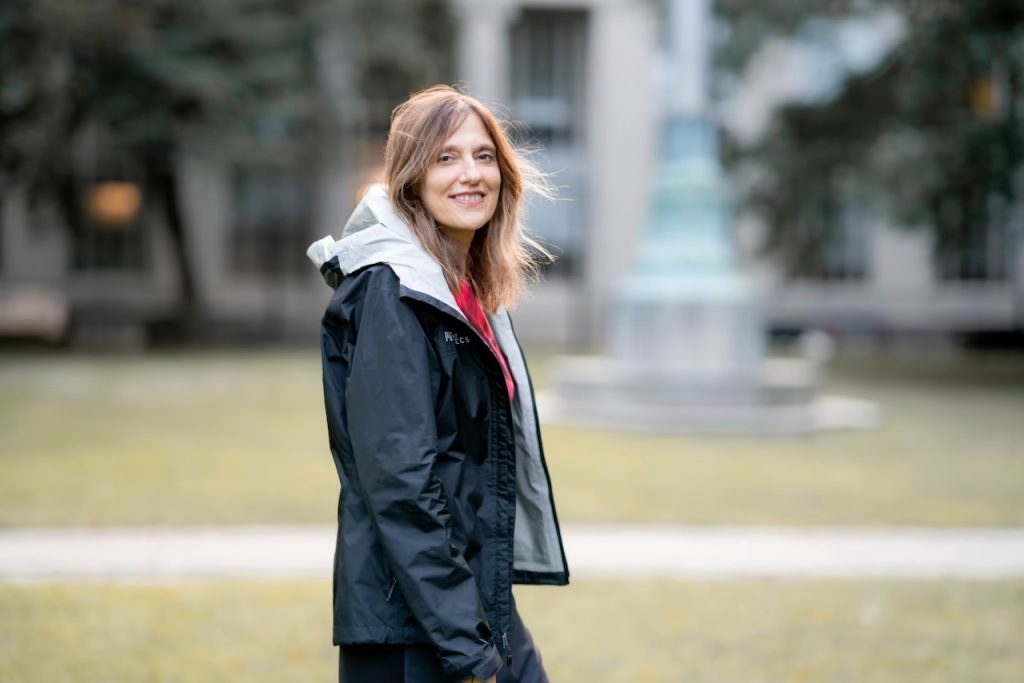
Rana el Kaliouby has built her career around one powerful idea: technology should understand us, not ignore us. As co-founder and former CEO of Affectiva, she pioneered Emotion AI — teaching machines to read human facial expressions, detect emotion, and respond in ways that feel more human.
What began in an MIT Media Lab spun out into a company whose tools helped everyone from children on the autism spectrum to automakers building safer cars. After Affectiva’s 2021 acquisition by Smart Eye, she continued influencing the field as a deputy CEO, working on AI systems that can spot drowsy or distracted drivers in real time.
Now an advisor and author of Girl Decoded, el Kaliouby is still a leading voice in ethical AI. Her message is simple but urgent: we must humanize technology before it dehumanizes us.
Dr. Arati Prabhakar served as Assistant to the President for Science and Technology and Director of the White House Office of Science and Technology Policy from October 2022 until the close of the Biden administration in January 2025.
In that role she put artificial intelligence at the heart of the federal science agenda, helping launch initiatives such as the Blueprint for an AI Bill of Rights (2022) and coordinating the administration’s 2023 executive actions on safe and trustworthy AI.
Prabhakar’s career bridges physics, venture investing, and high‑profile public service. In 1993 she became the first woman to lead the National Institute of Standards and Technology (NIST), and from 2012 to 2017 she directed DARPA, where she green‑lit early programs in autonomous systems and machine‑learning‑based cybersecurity.
Now outside government—her OSTP tenure ended with the change of administration in 2025—Prabhakar advises universities and nonprofits on responsible innovation. Her constant theme: powerful technologies must be steered toward broad public benefit, not just private gain.
At a time when everyone is talking about AI ethics, Francesca Rossi is doing the hard work of putting it into practice. As IBM’s Global Leader for AI Ethics, she’s tasked with making sure the company’s AI systems are not just powerful — but fair, transparent, and human-centered.
She leads internal ethics boards, advises international alliances, and pushes for concrete tools like bias checks and value alignment reviews — things that make ethical principles actionable, not abstract.
Before stepping into the ethics spotlight, Rossi was a renowned researcher in AI reasoning. Now, she blends that technical depth with a commitment to accountability. Her message is simple: Ethics doesn’t scale unless it’s built into the system.
Kate Crawford is a Research Professor at USC Annenberg and a Senior Principal Researcher at Microsoft Research, where she explores how artificial intelligence systems are defining power, labor, and the environment. Her work doesn’t just ask what AI does — it asks who it serves, what it costs, and who pays the price.
She co-founded the AI Now Institute at NYU, one of the first research bodies focused entirely on AI’s social impacts. And in her acclaimed book Atlas of AI, she maps the entire supply chain of machine intelligence — from lithium mines to data farms — revealing the human and environmental toll behind so-called “intelligent” systems.
Crawford’s message is clear: AI isn’t abstract — it’s built from real-world inputs, shaped by real-world power, and we need better tools to hold it accountable.
Cynthia Rudin is a professor of computer science at Duke University, and one of the most respected voices in the push for interpretable AI — systems that don’t just make predictions, but explain them.
While much of the AI world chases ever more complex “black box” models, Rudin’s focus is different: building algorithms that people — doctors, judges, regulators — can actually read and trust. From medical risk scores to criminal justice tools, her work proves that transparency and accuracy don’t have to be at odds.
Her models are used in high-stakes settings where decisions have real human impact, and in 2022, she was awarded the prestigious AAAI Squirrel AI Award, often described as the Nobel Prize of AI. Rudin is helping change the way AI gets built — and who it works for.
Barbara J. Grosz, Higgins Professor of Natural Sciences (Emerita) at Harvard University, is one of the architects of modern AI. Long before chatbots or virtual assistants became household tools, she was building the theoretical foundations for how machines understand language and collaborate with humans.
Her early work on discourse structure and collaborative planning helped defining what we now call multi-agent systems — the basis for everything from smart assistants to autonomous robotics. But her influence doesn’t stop at code.
Grosz has spent decades championing ethical AI and interdisciplinary collaboration. At Harvard, she launched the Embedded EthiCS program to integrate ethical reasoning into computer science education — a model that’s now being replicated globally. Even in retirement, she remains a vital force in AI policy and mentorship, advocating for systems that enhance human capabilities and respect human values.
Joy Buolamwini is the founder of the Algorithmic Justice League, a nonprofit focused on exposing and correcting bias in artificial intelligence. Through her work, she’s become one of the most influential voices pushing for accountability in tech — and one of the most effective.
Her journey began at MIT, where her now-famous research showed that facial recognition systems performed significantly worse on darker-skinned and female faces. That study, “Gender Shades,” sparked global change — from product recalls to internal audits at major tech companies.
Today, she blends data and activism, research and storytelling. Whether testifying before Congress or writing in her book Unmasking AI, she reminds the world that AI doesn’t just reflect code — it reflects power, policies, and who gets heard.
Rosalind Picard is a Professor in Health Sciences and Technology at the MIT Media Lab and Director of the Affective Computing Research Group — and the person who founded the field of affective computing itself. Long before tech companies talked about empathy, Picard was building the foundation for machines that could recognize and respond to human emotions.
Her early research led to tools that sense stress levels, detect seizures, and interpret facial expressions. One of her inventions became the basis for Empatica, a health tech company whose wearable wristbands are now FDA-approved to detect epilepsy-related events.
But what sets Picard apart isn’t just the tech — it’s the philosophy behind it. She’s vocal about consent, user benefit, and emotion AI that supports dignity, not manipulation. Her work reminds us that smart machines don’t need to replace empathy — they can be built to extend it.
Many of the women featured here already appeared in our list of the top AI leaders in the US — and that’s no coincidence. Their names come up again and again because their work is consistent, relevant, and often ahead of where the headlines are focused.
The influence of women in AI is already clear — not just through visibility, but through the work itself.